
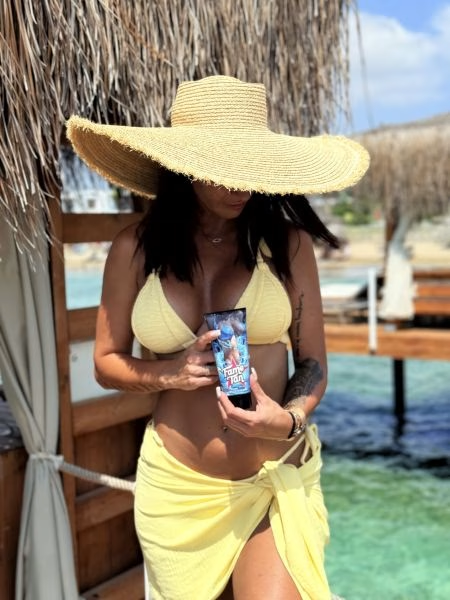
Accelerator or bronzer on sunbeds: which Fame Tan lotion suits you?
Fame Tan lotions tend to fall into two camps on a sunbed: accelerators (aimed at helping you make the most of your session without added cosmetic colour) and bronzers (which add some immediate colour for a “just tanned” look). Picking the right one is less about hype and more about how you tan, how fussy you are about even fade, and how clean and predictable you need the bed to be—especially in a salon where towels, acrylics and turnaround time matter.
TL;DR
– Choose an accelerator if you want a more natural-looking build and less risk of transfer onto acrylics, towels, and clothing.
– Choose a bronzer if you want instant-looking colour, but accept more aftercare, more careful application, and stricter hygiene habits.
– Fame Tan bronzers suit experienced tanners and salons that can manage consistent cleansing routines between clients.
– Patchiness usually comes from rushed application, dry elbows/knees, and too much product—not “weak lamps”.
– Any lotion should be sunbed-safe: avoid mineral oils, heavy perfumes, and anything not designed for UV tanning equipment.
Myth 1: “Bronzer is basically fake tan, so it doesn’t matter how you tan”
Bronzer lotions aren’t the same as a self-tan you apply overnight, but they can behave similarly in one crucial way: they can leave cosmetic colour on the surface and that colour can transfer. On a sunbed, that means acrylic hygiene becomes part of the result—your tan and the next person’s session.
The practical reality is that bronzer can look great when applied evenly and left to settle, but it highlights rushed application and dry patches more than an accelerator. If you’re the kind of person who gets marks on elbows, knees, wrists or ankles, bronzer will often make that more obvious.
Myth 2: “An accelerator is pointless—you’ll tan the same without it”
An accelerator won’t magically change your skin type, and it’s not a substitute for sensible session times and lamp condition. What it can do is improve glide, reduce drag (which helps even application), and support a more consistent look across your body—particularly if you’re prone to dry areas.
For salons, accelerators are often easier operationally: less risk of streaks on clients who apply in a rush, less immediate colour to rub off on acrylics, and fewer complaints that look like “the bed didn’t work” when it was actually uneven bronzer development.
Myth 3: “If a bronzer streaks, the bed or lamps are the problem”
Streaking is usually a product-and-prep issue, not an equipment fault. Common triggers include applying too much lotion, missing blend zones (neckline, sides of torso, underarms), and not softening dry areas first so the lotion spreads evenly.
That said, a bed in poor condition can amplify the problem. Rough or micro-scratched acrylics, residue from old cleaners, or leftover product film can grab at lotion and create drag, which encourages patchy coverage.
Myth 4: “Salon-grade bronzers are too strong for home use”
“Salon grade” usually means performance and finish, not that it’s inappropriate at home. The bigger question is whether you can keep the same discipline a salon should have: clean acrylics properly, avoid over-application, and store the product sensibly so it doesn’t separate or go off.
Home users also need to think about household realities—white bedding, pale sofas, and handling laundry. A bronzer can be absolutely fine at home, but it rewards tidy habits and patience more than an accelerator does.
What to do instead: match the Fame Tan style to your goal and your routine
If you’re deciding between a Fame Tan accelerator or bronzer, use these real-world cues rather than marketing names:
Pick a Fame Tan accelerator if:
You want a gradual, natural build; you tan fairly evenly; you hate transfer on clothes; or you share a bed (family home) and need a lower-fuss product. Accelerators also suit salons with lots of first-timers, because the outcome is less “dramatic” and therefore less likely to trigger panic about a slightly uneven first session.
Pick a Fame Tan bronzer if:
You want immediate-looking colour; you’re tanning for an event; you’re already confident applying lotion quickly and evenly; and you’re prepared for more careful post-session behaviour (letting it settle, avoiding tight clothing straight after, and being stricter with exfoliation/moisturising in the days around sessions). In salons, bronzers fit best when staff have time to reinforce application guidance and the cleaning process is tight.
A quick, practical application checklist (home or salon)
– Exfoliate earlier in the day (not right before) so dry patches don’t grab product.
– Use less lotion than you think, then add a touch more only where you feel drag.
– Smooth a thin layer over elbows, knees, hands and feet first, then blend what’s left over them again.
– Wait a couple of minutes before getting on the bed so you’re not sliding product onto the acrylic.
– Keep a dedicated towel for the bed and launder it separately if you’re using bronzer.
– Wash hands thoroughly after applying, including between fingers and around nails.
A UK scenario: the “busy Saturday bronzer” problem
A small salon in a Leeds suburb runs two sunbeds back-to-back on Saturdays, with just one staff member on the desk. A regular brings in a new Fame Tan bronzer and applies it fast in the cubicle because the next client is already waiting. Ten minutes later, the acrylic has visible handprints and a faint “shadow” where the client shifted, but it isn’t obvious until the next person lies down and the bed warms up. The second client comes out annoyed, saying they feel sticky and that the bed “smells sweet”. The staff member does a quick wipe, but the residue needs a proper clean to avoid a build-up film. By late afternoon, the acrylic feels grabby, clients are using more lotion to compensate, and the cycle repeats. The fix isn’t banning bronzer—it’s tightening the cleaning method and slowing the application by one minute.
What to watch: performance, hygiene, and bed condition signs
Transfer risk (bronzer-heavy): If you see tinted marks on acrylic edges, towel lines, or client jewellery areas, assume the bronzer is transferring and adjust process. In a salon, that’s a cue to reinforce “apply, wait, then lie down” and to switch to a cleaner that actually lifts lotion residue rather than just spreading it.
Patchy fade (often bronzer-related): Complaints about “going mottled” are frequently dry skin plus heavy product. Encourage moisturising on non-tanning days and lighter lotion on bony areas; it improves both bronzer and accelerator results.
Acrylic drag and haze: If hands don’t glide smoothly when cleaning, residue has built up. Drag increases uneven application, and haze can make the bed look tired even when lamps are fine. Use manufacturer-approved acrylic cleaners and avoid household products that can cloud or weaken plastics.
Heat and ventilation: Thick lotions and bronzers can feel heavier in a warm room, leading to sliding, sweaty patches and extra transfer. Keep airflow sensible and don’t block vents; if a room feels stuffy, that’s operationally relevant, not just comfort.
Common mistakes
1. Applying bronzer like moisturiser. A thick layer doesn’t mean better colour; it usually means more transfer, more patchiness, and more cleaning work.
2. Ignoring elbows, knees, and ankles until the end. Those areas need a lighter, blended approach or they’ll grab colour and look darker.
3. Using non-sunbed oils “because they feel nicer”. Oils and the wrong ingredients can damage acrylics and leave stubborn films that compromise hygiene.
4. Assuming complaints equal lamp failure. If results change suddenly, rule out lotion change, application speed, and acrylic residue before blaming lamps or timers.
Your next 7-day Fame Tan switch-over plan
If you’re changing from accelerator to bronzer (or the other way around), give it a week of consistent habits so you can judge fairly. Keep sessions consistent, keep the same shower timing, and don’t mix multiple lotions across consecutive sessions if you’re trying to spot what’s causing streaking or dryness. In salons, log which lotion type was used when a complaint happens; patterns show up quickly when you stop guessing.
FAQ
Can I use a bronzer on a sunbed at home without staining everything?
Yes, but treat it like a product that can transfer until it has fully settled. Use a dedicated towel on the bed, avoid tight clothing immediately after, and be more careful around light fabrics and upholstery. If staining keeps happening, an accelerator is usually the lower-hassle option.
Do accelerators work differently on stand-up units compared with lay-down beds?
The lotion choice matters less than application and how evenly you cover areas that dry out. Stand-ups can highlight missed spots on sides, underarms and lower legs because you’re upright and may rush. A smoother, lighter application (often easier with an accelerator) tends to be more forgiving.
What’s the best way for salons to keep acrylics clean when clients use bronzer?
Use a cleaner intended for sunbed acrylics and a method that lifts residue rather than smearing it. Change cloths regularly, pay attention to edges and where hands rest, and don’t let “quick wipes” replace a proper clean when the bed is busy. If acrylics start to feel tacky, it’s time to reset the process before complaints multiply.
Will bronzer make my tan look uneven if I have dry skin?
It can, because dry patches grab more product and show more immediate colour. Moisturise consistently on non-tanning days and apply less lotion over elbows, knees, ankles, hands and feet, blending carefully. If you’re often dry, an accelerator may give a more uniform look with less effort.
When should I stop and get a technician involved rather than blaming the lotion?
If acrylics are hazing, cracking, or feeling rough; if fans sound strained; if there’s an unusual smell; or if the unit is overheating, stop using it and arrange a competent inspection. Also escalate if the timer or safety shut-offs behave oddly—never bypass safety devices. Small faults compound quickly when heat, residue and high use all meet.